
Structural Differences
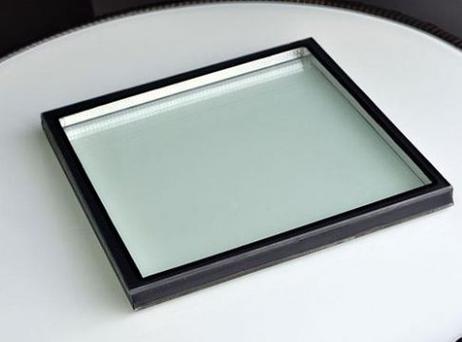
An insulating glass unit (IGU) uses two or more lites, an aluminium spacer and butyl/polysulfide sealants to enclose a dry air or argon cavity at atmospheric pressure; gap widths of 6–27 mm are typical.
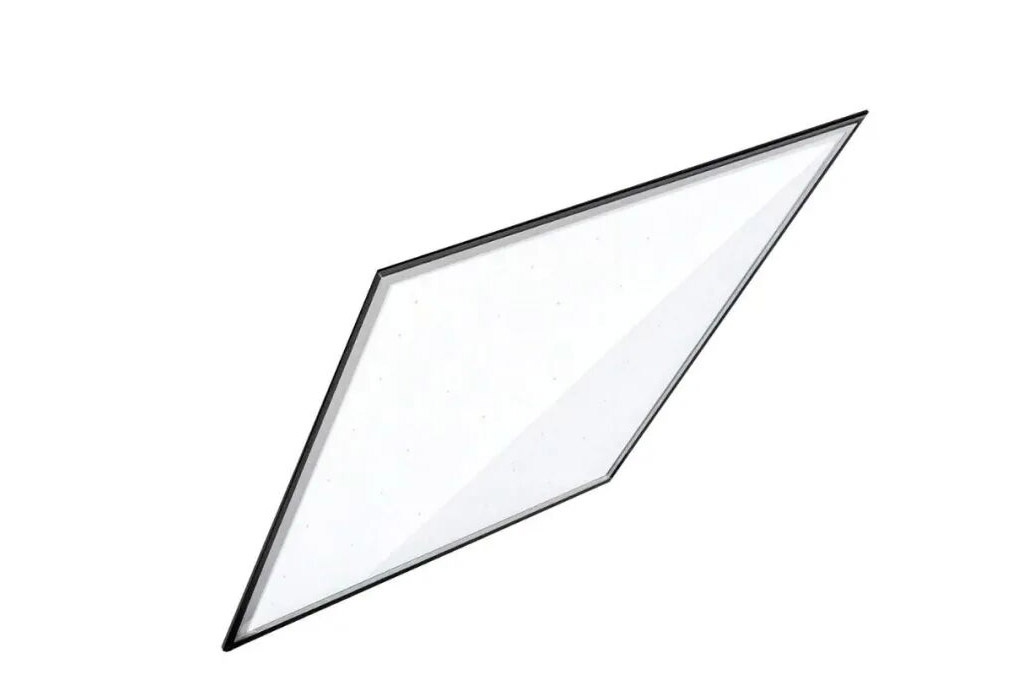
Vacuum insulating glass (VIG) comprises two lites edge-sealed at high temperature. The cavity is evacuated to 0.1–0.001 Pa and the lites are kept apart by micro-pillars. Removing the gas eliminates conductive and convective cavity transfer.
Performance
Thermal insulation. A 12 mm argon-filled IGU achieves U ≈ 2.6–2.8 W/m²K; a 24 mm argon-filled Low-E IGU achieves U ≈ 1.8–2.2 W/m²K. Dual Low-E VIG achieves U ≈ 0.4–0.8 W/m²K, giving it roughly two to four times the thermal resistance of a high-performance IGU.
Acoustics. IGUs suffer a cavity resonance dip at 100–300 Hz that reduces low-frequency attenuation. With no air cavity, VIG suppresses mid- and low-frequency transmission far more effectively. A 5+12A+5 IGU delivers Rw ≈ 30–33 dB, whereas a 5+vacuum+5 VIG delivers Rw ≈ 38–42 dB.
Condensation and fogging. IGU seal degradation eventually saturates the desiccant, leading to irreparable cavity fogging; large temperature differentials also promote inner-surface condensation. VIG’s metal fusion seal provides very low permeability, and the vacuum layer keeps interior surface temperatures above the dew point.
Thickness and weight. A 5+24A+5 IGU is approximately 34 mm thick; an equivalent 5+vacuum+5 VIG is only 10–12 mm thick and slightly lighter, simplifying frame retrofits.
Solar control. Both can be specified with single- or double-silver Low-E coatings. In IGUs the gas layer is still the primary conductive insulator. In VIG, vacuum removes gas conduction, so the Low-E coating’s radiation blocking becomes the dominant thermal control mechanism and its effect is more pronounced.
Service life. Conventional IGUs typically show seal failure and fogging within 8–15 years; premium three-seal designs reach 15–20 years. VIG’s high-temperature metal edge seal offers a theoretical service life of 25–30 years or more with negligible leakage risk.
Specification Trade-offs
IGU – Lower cost, flexible and large-format sizing, and straightforward repair or replacement. Limitations include a thermal performance ceiling, weak low-frequency sound insulation, and susceptibility to seal aging and fogging.
VIG – Extreme thermal performance, superior sound attenuation, ultra-thin profile, long-term resistance to fogging, and significant heating and cooling energy savings in severe climates. Limitations include higher unit cost, manufacturing constraints on very large formats, vulnerability to corner impact, and higher replacement cost.