
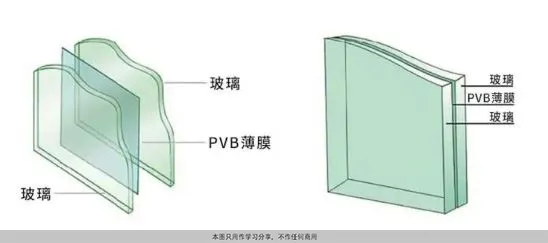
Laminated glass is a composite fabricated by bonding two or more glass lites with one or more organic polymer interlayers—typically PVB, SGP or EVA—under heat and pressure. The permanent adhesion between glass and interlayer gives the product distinct performance advantages over monolithic glass.
On fracture, the interlayer retains glass fragments, reducing the risk of injury from falling or flying debris.
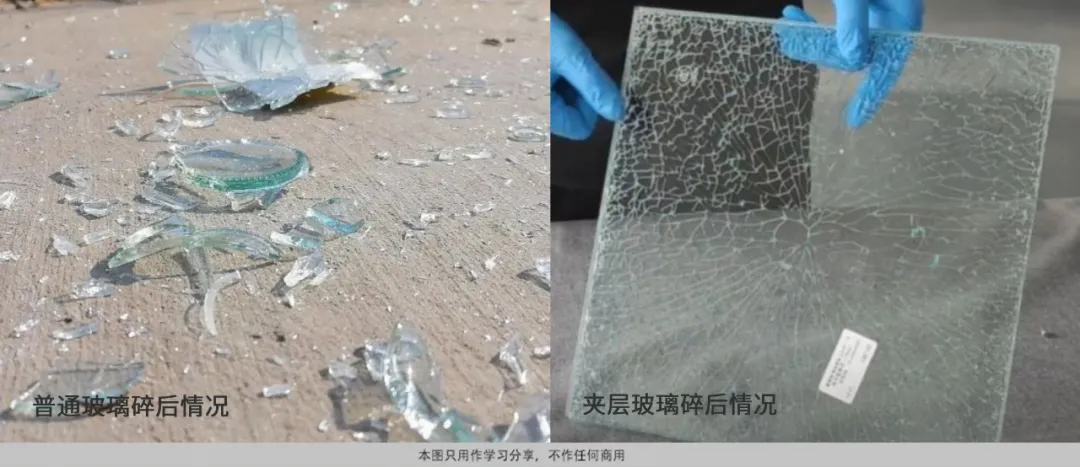
Depending on build-up and interlayer type, laminated glass can achieve impact resistance three to five times that of ordinary float glass.
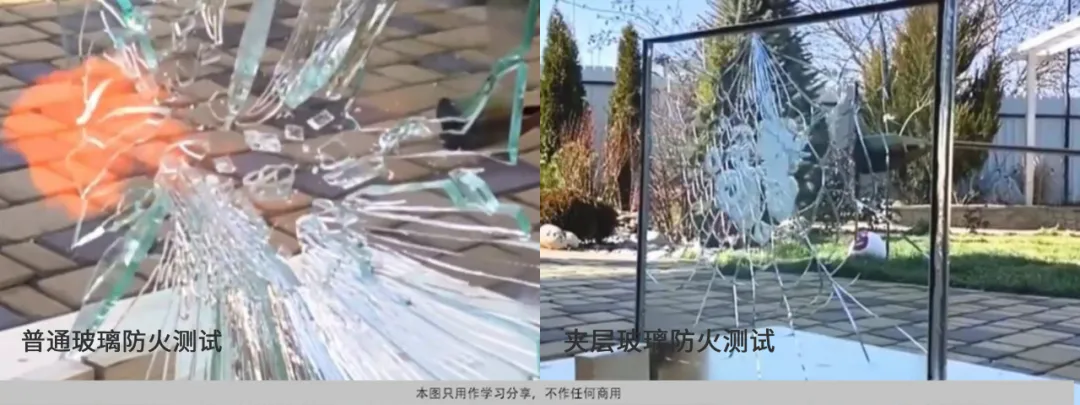
Specialist laminates can be engineered for acoustic damping, thermal insulation, UV filtration, and fire-rated, ballistic or blast-mitigation performance, as well as decorative finishes.
Commercial production began in Germany in 1910, but early interlayers suffered from ageing issues such as yellowing and embrittlement. The invention of PVB resin in 1927 and its subsequent adoption for automotive glazing in the 1930s established the modern laminated-glass industry. In China, fabrication moved from wet-process techniques—prone to bubbling and delamination—to reliable dry-process production lines during the twenty-first century.
Current product categories include standard, acoustic, bullet-resistant, blast-mitigation, seismic and decorative laminates. Decorative laminates are widely specified for interior and exterior architectural features in retail and office buildings, while bullet-resistant laminates are used in banks, museums and jewelry stores. The market continues to move toward thinner, lighter and multifunctional assemblies.