
Fire-rated glass is specified in building enclosures and internal compartmentation where both transparency and a defined fire resistance rating are required. Typical applications include:
Fire Doors
Vision panels in fire doors are installed at exit stair enclosures, corridor doors, and elevator lobby entrances. Depending on the door assembly rating and local code, the glazing may be monolithic non-insulating fire-rated glass (integrity only, “E” class) or laminated insulating fire-rated glass (“EI” class) where limiting radiant heat is required.
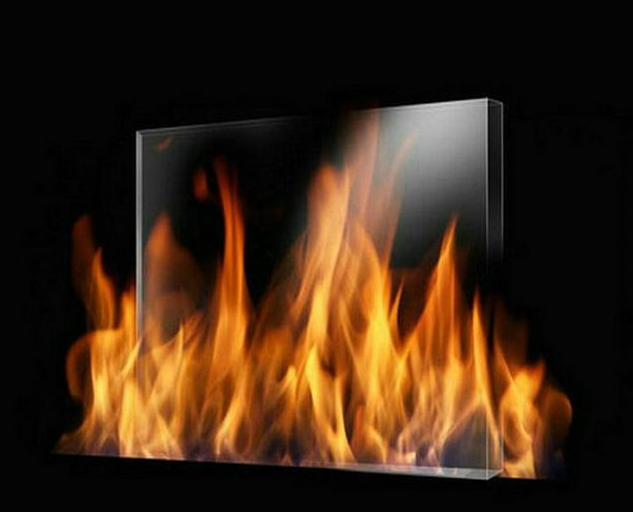
Fire-Rated Windows
At exterior wall openings—particularly in high-rise and multi-storey buildings—fire-rated windows limit fire propagation between floors and across facade cavities. The glazing and framing must maintain the required fire resistance rating under positive-pressure conditions.
Fire-Rated Partitions
In commercial, public, and industrial buildings, fire-rated glass partitions divide open plans into discrete fire compartments while preserving daylight and sight lines. These are installed as complete assemblies comprising fire-rated glass, steel or timber framing, intumescent seals, and tested hardware. An “EI”-rated system provides both integrity and insulation; “E”-rated glazing provides integrity only.
Smoke Baffles
Fire-rated glass smoke curtains are suspended from soffits in atriums, retail spaces, and lobbies to contain smoke within designated reservoir zones. This assists mechanical smoke extraction and maintains tenable conditions along egress routes.
Curtain Wall Integration
Within facade systems, fire-rated glass is used in spandrel zones and vision panels where floor-to-floor fire compartmentation is required. It must be co-ordinated with cavity barriers and perimeter seals to prevent fire spread through the inter-storey void.
Other Applications
Beyond doors and windows, fire-rated glass is used in floor glazing, ceiling panels, and internal partitions for high-risk areas such as server rooms and archive stores.
Selection depends on the required fire resistance rating, orientation (interior or exterior exposure), and whether the assembly must provide integrity only or combined integrity and insulation.