
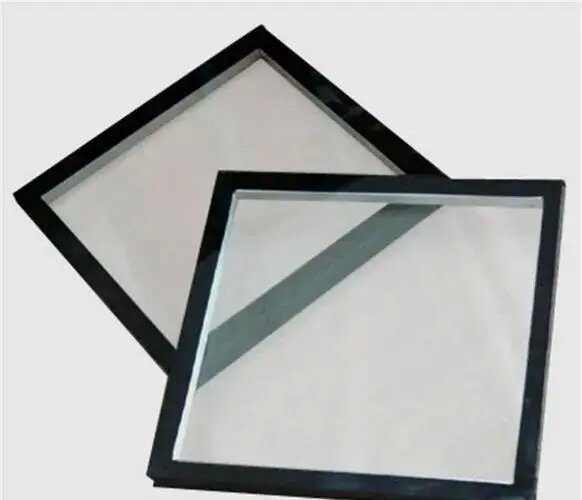
Fire-Rated Insulating Glass Units (IGU)
An assembly of two or three fire-rated glass lites bonded to an aluminium spacer frame with a desiccant and a high-strength composite sealant. The unit delivers thermal and acoustic insulation, weather resistance and transparency, while reducing curtain-wall dead load.
Borosilicate and Special-Composition Fire-Rated Glass
Produced from borosilicate, aluminosilicate or glass-ceramic substrates. These offer softening points above 900 °C, low thermal-expansion coefficients and high mechanical strength, maintaining shape under direct flame. Higher material and processing costs restrict use to premium applications.
High-Strength Monolithic Fire-Rated Glass
A chemically tempered monolithic lite that is transparent under normal conditions. The manufacturer states that the ion-exchange layer checks flame spread and heat transmission minutes after exposure, and that the glass retains fire-resistant performance at temperatures exceeding 1200 °C. Typical applications include fire doors, windows and compartment glazing in commercial and public buildings.
Wired Fire-Rated Glass
A laminated composite incorporating a metal wire or mesh within an organic or inorganic interlayer. Should the glass exceed its fire resistance rating and fracture, the mesh holds fragments in place, reducing the risk of fallout and injury. It also restricts air flow to slow fire propagation and offers a degree of anti-intrusion security, though visible light transmittance is reduced.
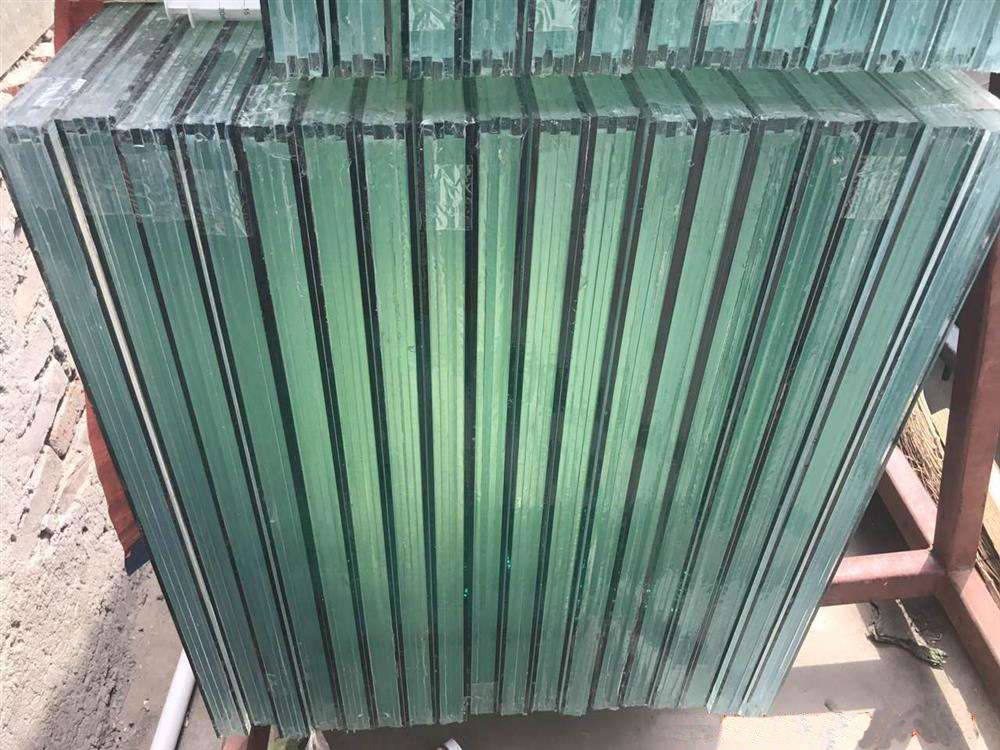
Grouted Fire-Rated Glass
A two- or three-ply assembly edge-sealed with fire-resistant gaskets and filled with a transparent fire-resistant gel. In a fire, the gel hardens into an opaque insulating layer that blocks flame spread and reduces heat conduction to the unexposed face. Used in fire doors, atrium glazing and computer-room compartment walls.
Thin-Coat Fire-Rated Glass
Made by spraying a transparent fire-resistant liquid onto single or multiple float-glass substrates and curing it to form a thin protective layer. When exposed to fire, the coating expands to create an insulating barrier that retards flame transmission across the glass surface.