
Fire-rated glass is designed to maintain integrity and, depending on the type, thermal insulation for a specified fire resistance rating. It retards flame and smoke spread, supporting safe evacuation and fire-fighting access. The correct classification determines whether the product is suitable for fire compartments, curtain walls, doors or partitions.
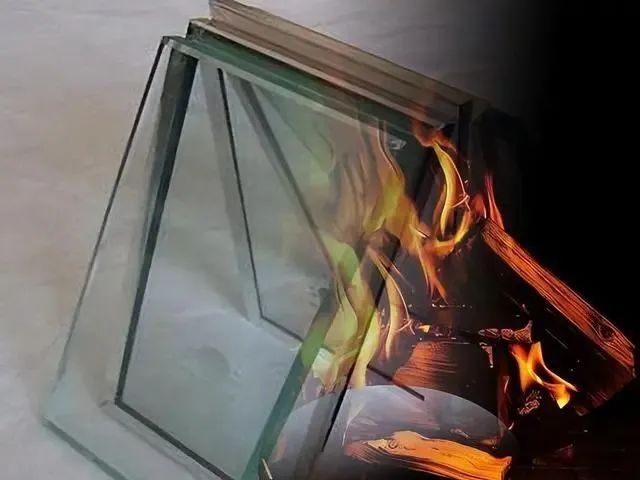
Monolithic non-insulating fire-rated glass (integrity only, “E” class)
Single-layer glass that provides fire integrity, resisting flame and smoke penetration. It is lightweight and offers high visible light transmittance, and is typically used in fire-rated partitions and fire windows where thermal insulation is not required.
Laminated insulating fire-rated glass (“EI” class)
Constructed from two or more glass lites with a transparent fire-resistant interlayer. It combines transparency with fire integrity and thermal insulation, and provides acoustic damping. Common applications include fire doors and fire-rated windows.
Fire-rated insulating glass unit (IGU)
Produced as an IGU with a fire-resistant coating on the fire-facing lite. It integrates acoustic and thermal performance with fire resistance, and is installed in building locations requiring both energy efficiency and a fire resistance rating.
Wired fire-rated glass
Incorporates a metal wire or mesh within the interlayer. The reinforcement improves impact resistance and helps the panel remain in place under high temperatures, reducing the risk of fall-out during a fire.
Specialty fire-rated glass
Manufactured from a modified glass composition rather than standard float glass. It is specified where higher fire resistance ratings or exceptional performance characteristics are required for special building conditions.