
Insulating Glass Unit (IGU)
An IGU comprises two or more lites separated by a sealed cavity filled with argon or krypton. The inert gas lowers the overall U-value significantly compared with single glazing and reduces condensation risk. IGUs remain the standard starting point for improving thermal performance in curtain walls and windows.
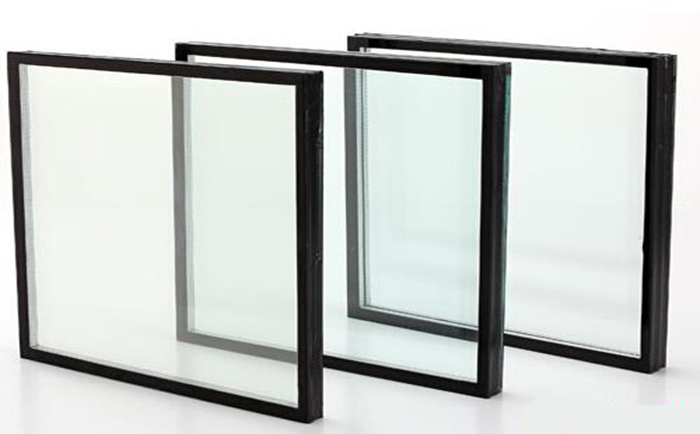
Vacuum Glazing
Vacuum glazing evacuates the space between two lites to a near-vacuum, virtually eliminating gas conduction. This gives a U-value approaching that of an insulated wall, making it suitable for cold climates and high-performance envelopes where cavity depth is restricted. The assembly also provides acoustic attenuation of more than 30 dB. Higher manufacturing costs have limited adoption, but the product is increasingly specified for premium retrofits and low-energy new builds.
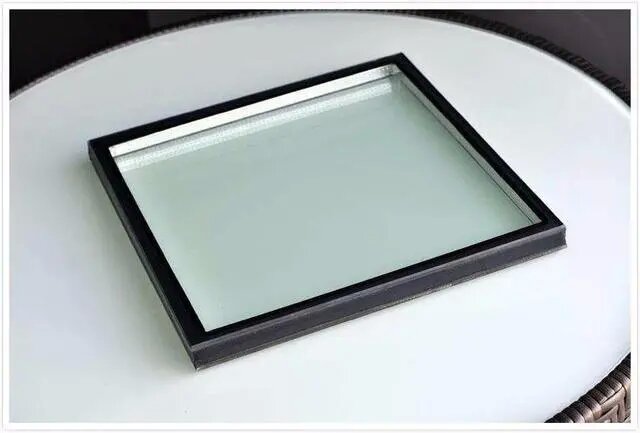
Heat-Absorbing (Tinted) Glass
Body-tinted glass contains metal-oxide colorants that increase absorption of infrared solar energy, reducing solar heat gain. It is available in a range of tints and thicknesses, with each combination offering a different level of solar absorption.
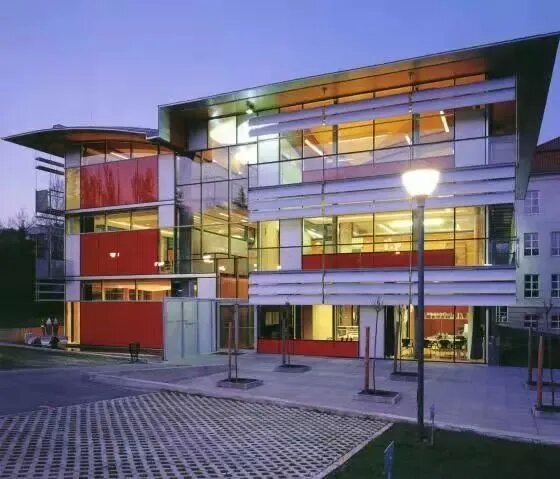
Heat-Reflective Coated Glass
Solar-control reflective glass carries a metallic coating that reflects a high proportion of incident solar radiation, outperforming tinted monolithic glass of equivalent thickness in rejecting solar heat. The coating creates a mirror effect on the exterior under daylight conditions, providing daytime privacy without blocking the view from the inside. It is suited to hot climates where limiting cooling load is the primary objective.
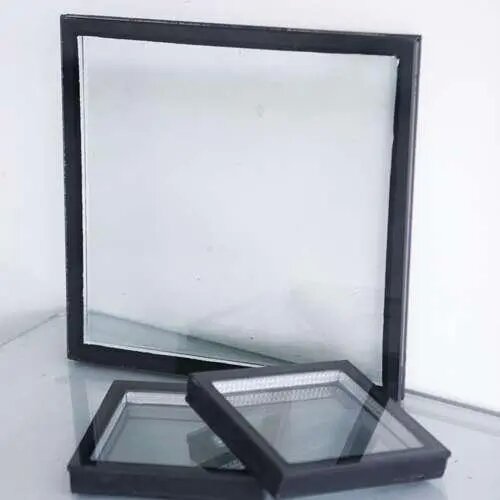
Low-E Glass
Low-E glass is float glass coated with nanometre-scale metal or metal-oxide layers that reduce surface emissivity. The coating is spectrally selective: it transmits visible light while reflecting long-wave infrared. In heating-dominated climates, a high-solar-gain Low-E coating admits passive solar energy and reflects radiant heat back into the interior. In cooling-dominated climates, a solar-control Low-E coating limits solar heat gain while maintaining daylight transmission. Selecting the appropriate coating type allows optimisation of U-value and SHGC for the building’s orientation and climate zone.