
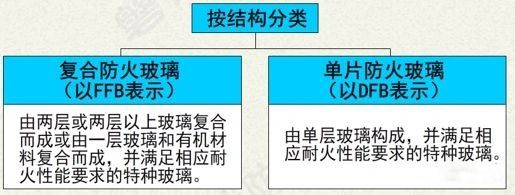
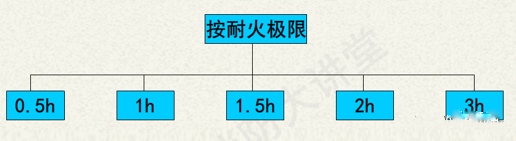
Chinese standard GB 15763.1-2009 classifies fire-rated glass by structure, performance and fire resistance rating. The five standard ratings are 30, 60, 90, 120 and 180 minutes. Products are designated either Class A — laminated insulating fire-rated glass providing both integrity and insulation (“EI”) — or Class C — monolithic non-insulating fire-rated glass providing integrity only (“E”).

For interior fire partitions and atrium barriers between connected floors, glazed assemblies must use Class A glass rated to match the partition. Where Class C glass is used in these locations, the design must incorporate an automatic sprinkler cooling system. Exterior facade openings between floors may use Class C glass where solid walls or projecting fire eaves are impractical; the glass must provide at least 60 minutes of fire integrity in high-rise buildings and at least 30 minutes in multi-storey buildings.
Although laminated insulating glass rated at 180 minutes is available, it cannot substitute for a full firewall and is limited to local openings within a firewall. Note that GB 15763.1-2009 removed the previous Class B category (integrity plus radiant heat flux control) that existed in the 2001 edition of the standard.
Common product forms include high-strength monolithic fire-rated glass for non-insulating curtain-wall applications; borosilicate fire-rated glass for high-temperature stability; and nano-silica composite or gel-filled laminated insulating glass for Class A assemblies. Wired laminated glass retains shards after fracture to prevent collapse beyond the rated duration, while thin-coat fire-rated glass uses an intumescent surface layer that expands under heat to protect the substrate. Fire-rated lites can also be fabricated into insulating glass units (IGUs) to combine fire resistance with thermal and acoustic performance.