
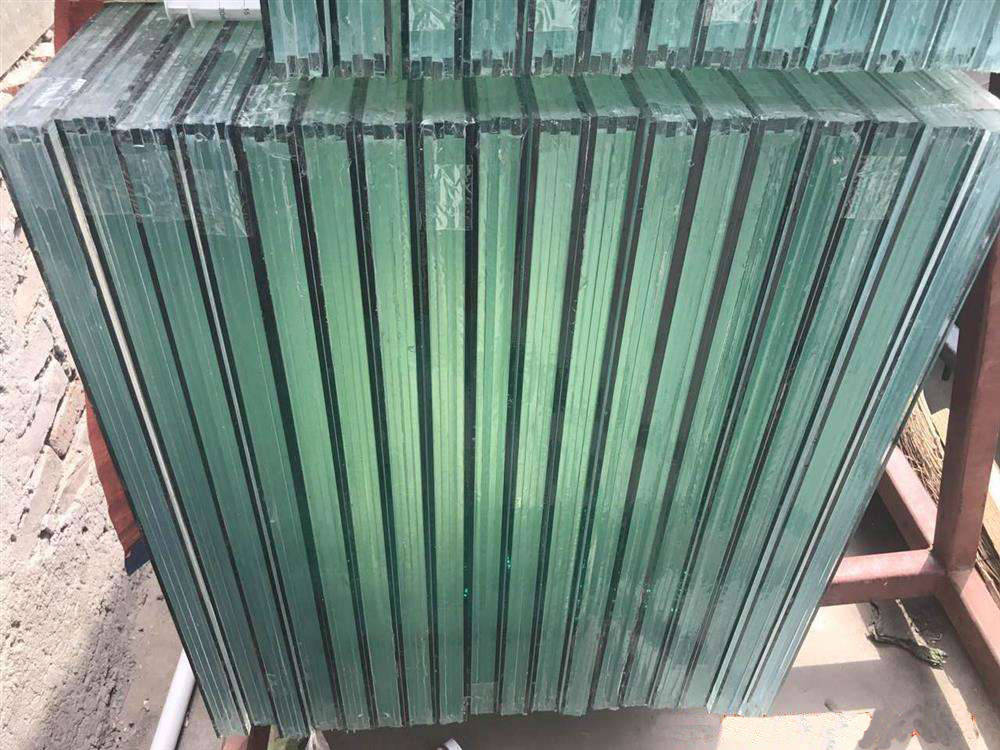
Both nano-silica composite and grouted fire-rated glass are laminated insulating types that provide integrity and thermal insulation (EI class). The main differences are in how they react to fire, how they are fabricated, how they withstand weathering, and where they can be installed.
Fire behaviour
Grouted glass contains a liquid interlayer that foams and turns opaque white when heated, creating a thermal barrier. It is typically rated for about 60 minutes of insulation. Nano-silica composite glass uses an inorganic, expandable nano-silica interlayer that keeps the assembly intact for 60–90 minutes while limiting back-face temperature rise to about 65 °C, maintaining greater transparency during the fire event.
Fabrication
Grouted units are made by pouring a fire-resistant liquid between two glass lites and allowing it to cure in place; yield and optical quality depend heavily on glass flatness and filling accuracy. Nano-silica composite glass is produced by bonding two or more glass lites with an inorganic expandable nano-silica interlayer, generally giving more consistent results.
Weathering and applications
Grouted interlayers degrade under long-term UV exposure and can yellow, bubble, or leak, so the product is restricted to indoor, non-sun-facing applications such as interior fire-rated doors, windows, and partitions.
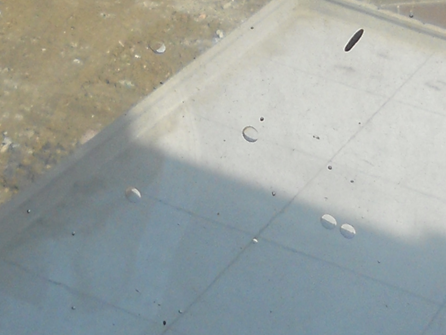
Nano-silica composite interlayers are rigid and chemically stable, giving them strong weathering resistance for both indoor and outdoor use, including external fire-rated doors, partitions, and fire-rated curtain walls.