
In September 2021, China’s Ministry of Emergency Management issued a draft partial revision of the Code for Fire Protection Design of Buildings for public comment. The proposal contains 82 amendments covering strengthened fire-technical requirements for buildings taller than 250 m, children’s activity venues, high-rise timber structures and first-floor egress configurations. The consultation signals tighter enforcement of fire-compartment boundaries, supporting wider use of integrity-rated glazing.
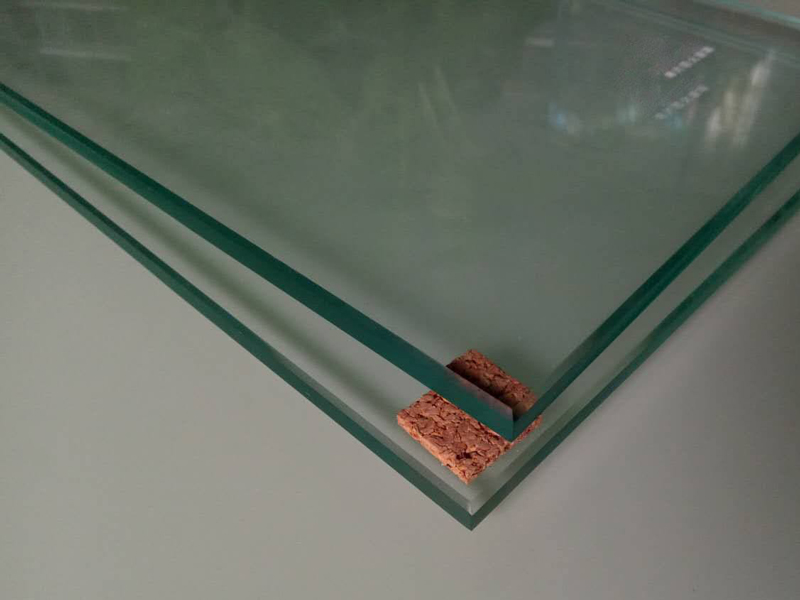
High-stress fire-rated glass is a monolithic product with internal stress between 180 MPa and 230 MPa. It is installed in fire doors, fire windows, skylights, smoke curtains and fire partitions in public and commercial buildings such as hotels, hospitals, airports and exhibition centres. The source indicates fire resistance ratings exceeding 60 minutes.
Manufacturer Xionggang Glass states that, at equal thickness, the material achieves flexural strength six to twelve times that of float glass and 1.5 to three times that of tempered glass. In fire testing it reportedly withstands 1000 °C flame exposure for 96–183 minutes without fracture, maintaining integrity to block flame and smoke spread. The source describes the product as high-strength monolithic fire-rated glass that breaks into small granular fragments with obtuse edges if damaged.
The glass can be further processed into laminated glass, insulating glass units (IGUs), coated glass and point-supported curtain wall glass. Its high strength permits thinner lites or larger panel sizes under identical wind loads, improving transparency while reducing weight. Xionggang Glass mass-produces the material in southwest China for domestic projects.