
Glass melting furnaces are designed to run continuously. Inside, silica-based batch melts into a viscous fluid that flows through refining zones and on to the forming line. If firing stops and the melt cools, it solidifies throughout the flow path and working chamber.
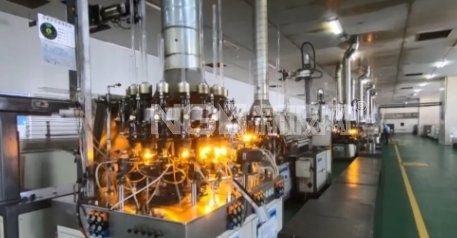
Once solidified, glass expands against furnace refractory, risking cracks and distortion of the chamber, throat, and feeder structures. The material bonds to internal surfaces, and reheating to restart production is rarely feasible because residual glass creates uneven thermal loads and can clog channels. Mechanical removal is difficult and usually requires extensive teardown.
For procurement teams, contractors, and fabricators, this operational reality means float-glass capacity is inherently inflexible. A furnace cannot be idled during slow demand periods and brought back online quickly. Supply stability depends on continuous operation; when a furnace does come offline for cold repair, the resulting supply gap affects lead times for large curtain wall and IGU orders.