
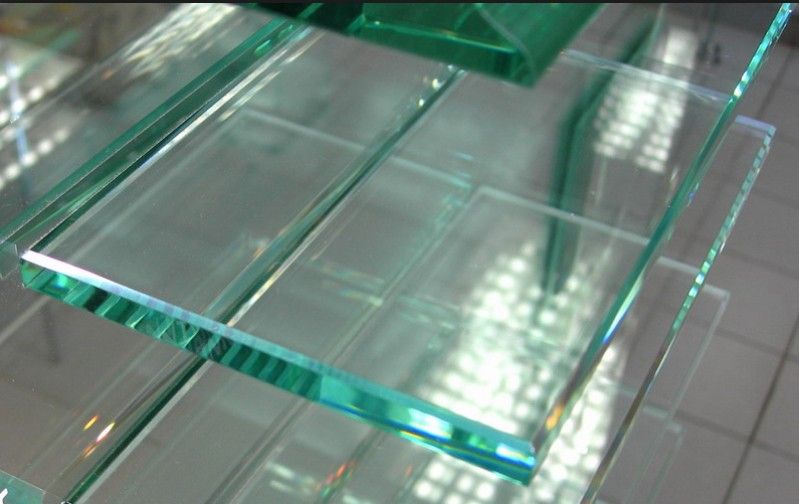
Tempered glass is pre-stressed safety glass. Strength is increased by inducing compressive surface stress through either thermal (physical) or chemical processing. When loaded, external forces must first overcome this surface compression before the glass experiences tensile stress, improving load-bearing capacity and resistance to mechanical and thermal loads.
Properties and trade-offs
Tempered glass offers several times the bending strength and impact resistance of non-tempered glass. On fracture it disintegrates into small, blunt fragments, reducing injury risk. Resistance to thermal shock is roughly 3–5 times higher, and it generally tolerates temperature differentials above 250 °C.
Post-tempering cutting, edging, or drilling is impossible; all shaping must be completed before the tempering cycle. Spontaneous breakage can occur due to inclusions or edge damage. Thermal tempering also produces minor surface distortion and slight thinning: 4–6 mm glass typically loses 0.2–0.8 mm, and 8–20 mm glass loses 0.9–1.8 mm, depending on furnace parameters. This makes tempered glass unsuitable for mirror applications.
Physical (thermal) tempering
Glass is heated to near its softening point, then cooled rapidly with high-pressure air. The surfaces contract and solidify under compressive stress while the slower-cooling core remains in tension. Greater quench intensity produces higher final strength.
Chemical tempering (ion exchange)
Glass is immersed in a molten salt bath at a controlled temperature—either below or above the glass transition point. Smaller alkali ions in the glass surface exchange with larger ions from the salt. The resulting ion crowding creates a compressive surface layer, increasing mechanical strength and thermal stability without the optical distortion associated with air-quenching.