
Fire-rated glass limits fire and smoke spread in buildings. It falls into two main families: monolithic and composite.
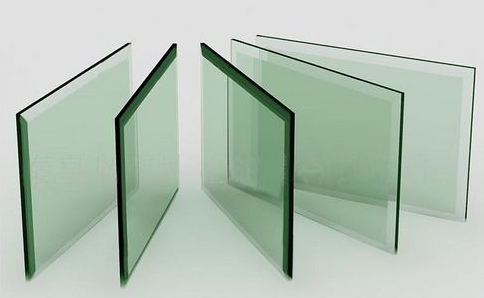
Monolithic fire-rated glass
High-strength monolithic fire-rated glass
This is float glass that has been chemically or physically tempered to increase surface stress. Marketed as cesium–potassium or high-stress clear-float products, it provides integrity-only performance with a fire resistance rating generally not exceeding 90 min and no thermal insulation. Low weight and cost aid uptake, but poor fabrication can lead to surface-stress relaxation over time, while edge or surface damage can degrade fire performance. Spontaneous breakage is also reported, and furnace-test pass rates are reported to be low. The product is normally specified for exterior fire-resistant windows and other locations where insulation is not required.
Borosilicate fire-rated glass
Produced from low-expansion, high-softening-point borosilicate, this type was originally developed by Schott in Germany; Chinese R&D and trial production began in 2018. Domestic furnaces generally use full-electric cold-top or oxy-fuel electric hot-top melting. Fire resistance ratings typically reach 120–180 min. Advantages include light weight, no spontaneous breakage, stable performance that is less sensitive to frames and ancillary materials, low-iron aesthetics, and strong corrosion and UV resistance. When paired with a water-spray system, it can replace a GB Class A insulating fire-rated glass system. Drawbacks are immature production technology, low yield, high price, and no insulation. Applications include fire-resistant windows, curtain walls, smoke barriers, skylights, fire-rated floors, atrium glazing, pedestrian-street fire screens, and fire partitions.
Composite fire-rated glass
Inorganic laminated composite fire-rated glass
A dry-process laminated glass made from treated high-strength float glass and an inorganic transparent fire-resistant interlayer. It can be supplied as insulating fire-rated glass and is field-cuttable. Weaknesses are poor weather resistance, inability to form curved or irregular shapes, limited availability in ultra-large formats, complex fabrication, long lead times, and low yield. It is used in fire partitions, skylights, and fire-rated floors.
Inorganic grouted fire-rated glass
Built from two or three glass lites perimeter-sealed with special fire-resistant strips, with the cavity filled with inorganic fire-resistant liquid. It can be produced in thicknesses meeting either GB Class A (insulating) or GB Class C (non-insulating) requirements. Compared with organic grouted alternatives—now largely obsolete because they bubble, discolour, and suffer poor weather resistance—the inorganic version offers stable fire performance and appearance, strong ageing resistance, heat-radiation shielding, high adhesion, acid and heat resistance, and sound insulation. Large-area installations in China have been selected for improved safety, stability, and lifecycle cost. Typical uses are fire partitions, floors, skylights, fire doors, and escape passages or stairs where insulation and higher fire resistance are required.